



August 3, 2026
As financial services firms grow, technology becomes increasingly difficult to manage through ad hoc support and reactive decision making. What once consisted of maintaining computers and troubleshooting occasional network issues evolves into protecting client information, managing cloud platforms, reducing cybersecurity risk, supporting compliance initiatives, and ensuring employees have the technology they need to serve clients efficiently.
Eventually, every leadership team faces the same question.
Should we build an internal IT department, or should we partner with a managed IT provider?
It is a reasonable question, but it often starts with the wrong assumption. The decision is not about choosing one model over another. It is about determining which approach gives your business the expertise, scalability, and strategic guidance it needs without creating unnecessary cost or operational risk.
For most financial services firms with 20 to 100 employees, the answer is less about headcount and more about complexity. The more your business depends on technology to protect client data, support advisors, satisfy regulatory expectations, and maintain uninterrupted operations, the more important it becomes to have access to a broad range of technical expertise. That expertise rarely exists within a single individual.
The Traditional IT Department Was Built for a Different Era
Years ago, many organizations hired an IT manager as soon as they reached a certain size. That person maintained servers, purchased computers, managed software, and responded whenever employees needed help.
For a long time, that model worked well.
Today's technology environment is dramatically different.
Financial firms now rely on Microsoft 365, cloud-hosted applications, secure client portals, identity management platforms, endpoint detection and response, cybersecurity awareness training, mobile device management, backup and disaster recovery, and dozens of third-party software providers. At the same time, cyber threats continue to evolve, regulators expect stronger information security practices, and cyber insurance carriers require organizations to demonstrate mature security controls before issuing or renewing policies.
The responsibilities placed on technology teams have expanded much faster than most organizations realize.
Hiring one IT professional no longer means hiring one skill set.
It means expecting one individual to perform the work of an entire department.
The Generalist Challenge
Internal IT professionals are often exceptionally capable.
They understand the business, know the employees personally, and become trusted members of the leadership team. They are familiar with the firm's applications, workflows, and culture in ways that an outside provider cannot immediately replicate.
The challenge is not competence.
The challenge is capacity.
A single technology professional may be expected to respond to support requests, manage Microsoft 365, monitor cybersecurity alerts, maintain backups, negotiate with vendors, plan hardware replacements, document systems, administer user accounts, oversee cloud infrastructure, evaluate new software, and prepare technology budgets.
Each of those responsibilities could easily become a full-time position within a larger organization.
Eventually, priorities begin competing with one another.
When employees need immediate assistance, long-term planning gets delayed.
When cybersecurity requires attention, strategic projects slow down.
When software implementations become urgent, documentation falls behind.
None of these problems occur because internal IT professionals lack ability.
They occur because modern technology environments require specialized expertise across multiple disciplines.
What a Managed IT Partner Brings to the Organization
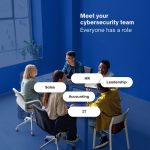
One of the greatest advantages of partnering with a managed IT provider is access to an entire team rather than a single individual.
Instead of relying on one person to understand networking, cybersecurity, Microsoft 365, cloud infrastructure, compliance, disaster recovery, vendor management, and strategic planning, your organization gains specialists whose expertise is focused on each of those areas.
That depth becomes increasingly valuable as technology grows more sophisticated.
When Microsoft introduces new security capabilities, there are engineers dedicated to understanding those changes. When cybersecurity threats evolve, security professionals adjust monitoring and response procedures. When infrastructure projects arise, experienced architects help develop solutions based on lessons learned from supporting many financial services firms.
The organization benefits from collective experience instead of depending upon one person's knowledge.
This model also creates continuity.
Vacations, illnesses, employee turnover, or unexpected departures do not leave the business without technology leadership.
The knowledge belongs to the team rather than remaining with one individual.
Looking Beyond Technical Support
Many executives still associate managed IT providers with help desk services.
That perception overlooks how the industry has evolved.
Modern managed IT is as much about business management as technology management.
An experienced technology partner should help leadership evaluate software vendors, develop annual budgets, prioritize cybersecurity investments, improve operational efficiency, support mergers or acquisitions, and identify technology risks before they become business problems.
Support remains important.
It simply becomes one component of a much broader relationship.
The best technology partners spend as much time discussing business objectives as they do discussing hardware.
When Internal IT Makes Sense
There are situations where building an internal technology department is absolutely the right decision.
Organizations with several hundred employees often require dedicated internal resources because technology initiatives become deeply integrated into daily operations. Firms developing proprietary software may also benefit from maintaining specialized technical talent in-house.
Some organizations simply value having technology leadership physically present every day.
Those are valid business decisions.
The important consideration is understanding that hiring an internal IT professional rarely eliminates the need for outside expertise.
Even large enterprises rely on external partners for cybersecurity, cloud infrastructure, specialized consulting, compliance support, penetration testing, and strategic projects.
Technology has become too broad for any organization to maintain every area of expertise internally.
The Hybrid Model Is Becoming the New Standard
Increasingly, financial services firms are choosing a hybrid approach.
Rather than viewing internal IT and managed services as competing models, they combine the strengths of both.
Internal technology professionals remain focused on business applications, employee relationships, operational initiatives, and projects unique to the organization.
A managed IT partner provides cybersecurity expertise, infrastructure management, Microsoft 365 administration, monitoring, backup management, vendor coordination, executive planning, and access to specialized engineers.
Each side focuses on what it does best.
The result is often stronger than either model could achieve independently.
Instead of replacing internal staff, the technology partner extends their capabilities while reducing the pressure to become an expert in every emerging technology.
The Financial Perspective
Technology staffing decisions are often evaluated primarily through salary comparisons.
That approach overlooks many of the associated costs.
Hiring an experienced technology professional involves compensation, benefits, payroll taxes, recruiting expenses, training, certifications, software, equipment, and ongoing professional development. As cybersecurity, cloud technologies, and Microsoft platforms continue evolving, maintaining current expertise requires continual investment.
A managed IT partnership distributes those costs across an entire engineering team.
Rather than hiring specialists in cybersecurity, Microsoft 365, networking, backup, cloud infrastructure, compliance, and strategic planning individually, organizations gain access to all of those capabilities through a predictable monthly investment.
For firms with twenty to one hundred employees, that model often provides greater expertise while maintaining more consistent budgeting.
The decision should never be based solely on salary comparisons.
It should be based on the total value delivered to the business.
Technology Leadership Matters More Than Technology Support
One question often reveals whether an organization has outgrown a purely reactive approach to IT.
When leadership discusses next year's business goals, is technology part of that conversation?
If the answer is no, there is likely an opportunity to improve.
Technology should influence hiring plans, office expansions, cybersecurity initiatives, acquisitions, software investments, and client experience improvements.
Those conversations require strategic guidance.
Whether that guidance comes from an internal Chief Information Officer, a Fractional CIO, or a trusted technology advisor matters less than ensuring it exists.
Organizations that consistently outperform their peers tend to treat technology as part of business planning rather than an operational expense managed independently.
The Better Question
Many executives begin by asking whether they should hire internal IT or outsource technology.
A more useful question is this.
What combination of expertise gives our business the greatest opportunity to succeed?
For some organizations, that answer will be an internal technology department.
For others, it will be a managed IT partnership.
For many financial services firms, the strongest solution combines both.
Technology has become too important to build around a single individual or a single vendor.
The objective is to create a technology program that supports growth, strengthens cybersecurity, improves operational resilience, and gives leadership confidence that the business is prepared for whatever comes next.
That is the role DigeTeks is designed to fill. Rather than simply resolving technical issues, we help financial services firms that are located within approximately 50 miles of Buffalo, Sheridan & Laramie, WY; Denver Metro & North Front Range, CO; Lynchburg, VA; and Kona, HI, build technology strategies that support long-term business success.