
October 20, 2026
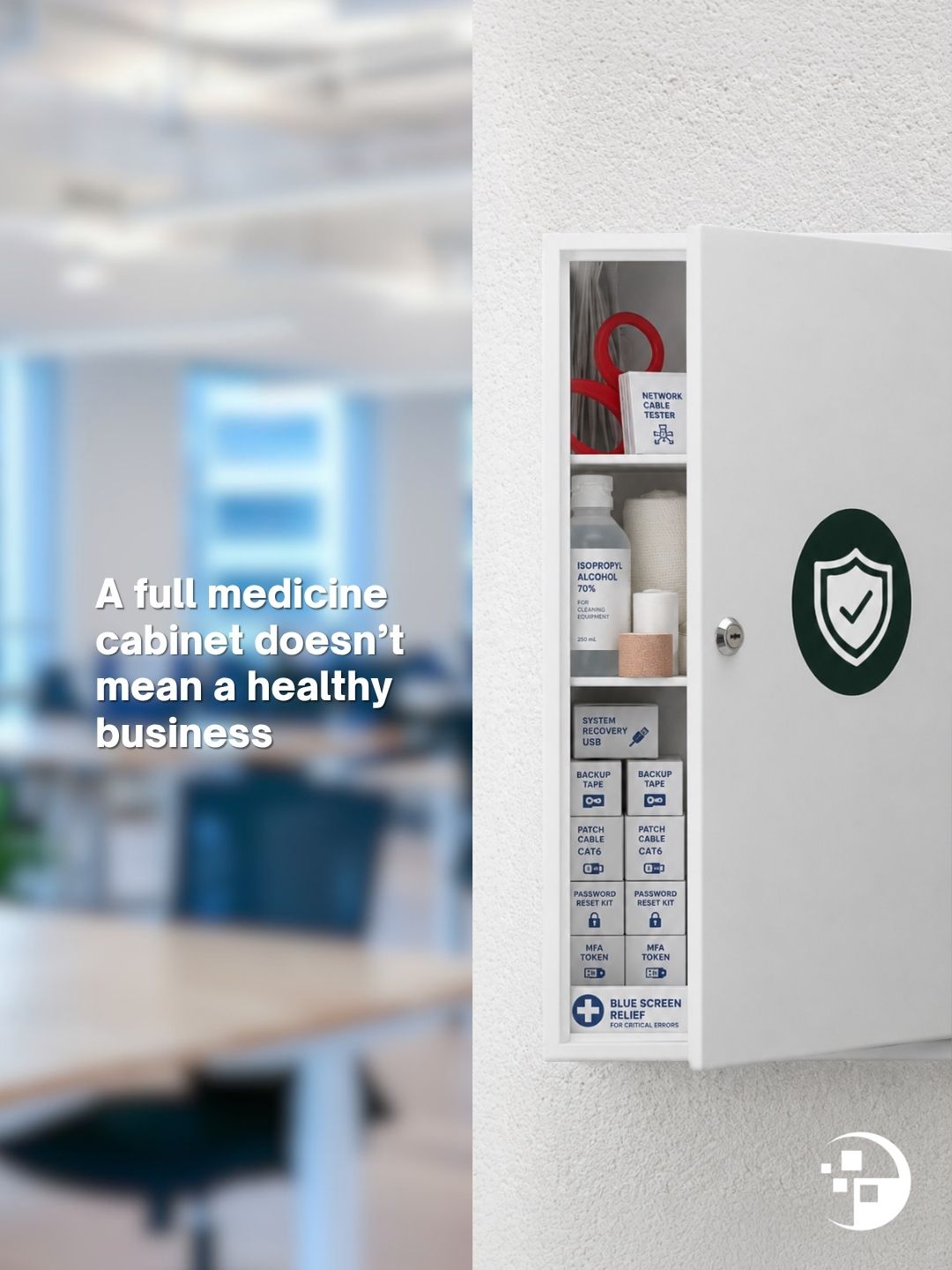
Every fall, the average medicine cabinet becomes a little more crowded.
There may be cold medicine left over from last winter, vitamins purchased in bulk, half-used bottles of cough syrup, and prescriptions that should have been discarded months ago.
The cabinet may be full, but that does not necessarily mean the household is healthier.
The same can be true of your cybersecurity environment.
A new threat leads to one purchase. A cybersecurity insurance requirement prompts another. A vendor recommends an additional solution. Over time, your organization accumulates more tools, subscriptions, alerts, and dashboards.
But a longer list of security products does not automatically provide stronger protection.
The more important questions are:
- Do these tools address the risks your business actually faces?
- Are they configured and managed correctly?
- Is someone monitoring the alerts?
- Do your employees understand their responsibilities?
- Can your organization respond effectively when something goes wrong?
Effective cybersecurity is not about collecting tools. It is about building a coordinated strategy that protects your business, supports compliance, and strengthens business continuity.
Cybersecurity Myth: More Tools Mean Better Security
It is an understandable assumption.
If one cybersecurity solution provides protection, adding another should make the business even more secure.
Multiple layers of protection are important, but only when each layer serves a clear purpose. Adding tools without evaluating the larger environment can create unnecessary overlap, competing alerts, management challenges, and additional expense.
It can also create a false sense of security.
A business may have several sophisticated security products in place but still remain vulnerable because:
- Important alerts are not being reviewed
- Security tools are not configured properly
- Former employees still have active accounts
- Critical data is not included in backups
- Employees do not know how to report suspicious activity
- Incident response procedures have not been tested
- Security policies have not kept pace with the organization
The number of tools matters far less than whether the right safeguards are working together to reduce your organization’s actual risks.
Healthy Cybersecurity Works Like a System
Your immune system is not a collection of unrelated remedies. It is a coordinated system designed to recognize problems, respond to threats, and help the body recover.
Your organization’s cybersecurity should work in a similar way.
The system may include:
- Security technology
- Employee awareness training
- Cybersecurity and acceptable-use policies
- Multi-factor authentication
- Access controls
- Data backups and recovery testing
- Monitoring and alert response
- Incident response planning
- AI governance and usage policies
- Compliance documentation
Each component plays a different role. The strongest protection comes when those components support one another.
For example, an email security tool may block many phishing attempts, but employees still need to recognize and report the messages that get through. Multi-factor authentication can strengthen account security, but someone must respond when an employee receives an authentication request they did not initiate.
Backups can support recovery, but only if they contain the right data, are protected from attackers, and are tested regularly.
Cybersecurity tools are valuable, but they are most effective when they are part of a coordinated strategy built around the needs of the business.
When Cybersecurity Becomes Too Complicated
More technology can sometimes create more complexity.
If several tools perform similar functions, your organization may be paying for overlapping services without gaining meaningful protection. Multiple systems may generate duplicate or competing alerts, making it harder to identify which issues require immediate attention.
Complexity can also create gaps in responsibility.
One provider may assume another provider is reviewing an alert. The IT team may believe a vendor is managing a particular system. Leadership may assume that purchasing the technology means everything is already covered.
When responsibilities are unclear, important tasks can be missed.
This does not mean your organization should eliminate tools simply because they overlap. Layered protection is often intentional and necessary. The goal is to understand why each safeguard exists, how it supports the rest of your security environment, and who is responsible for managing it.
Give Your Cybersecurity a Checkup
You do not need to understand every technical detail of your cybersecurity environment. However, leadership should be able to get clear answers to several important questions.
1. What are we currently using, and why?
Someone on your internal team or a trusted outside partner should be able to explain the purpose of your major security tools in clear business language.
You should understand what each tool protects, why it is necessary, and how it supports your broader cybersecurity and compliance strategy.
If no one can explain why a product is in place, it may be time to investigate.
2. Where do our protections overlap?
Overlap is not automatically a problem. Layered cybersecurity often includes multiple safeguards designed to reduce the same type of risk.
What matters is whether that overlap is intentional.
Your organization should know whether multiple products are providing meaningful layers of protection or simply duplicating one another without delivering additional value.
3. Where are the gaps?
A well-stocked medicine cabinet cannot help with something that is missing entirely. The same is true of cybersecurity.
Common gaps may include:
- Unprotected devices
- Inconsistent multi-factor authentication
- Weak access controls
- Outdated security policies
- Untested backups
- Limited employee training
- No documented incident response plan
- Unapproved use of AI tools
- Unclear vendor security responsibilities
A cybersecurity assessment can help identify risks that may not be obvious when individual tools are evaluated separately.
4. Who is monitoring the environment?
Security tools can generate alerts around the clock, but an alert does not protect the business unless someone reviews it and knows how to respond.
Your organization should know:
- Who receives security alerts
- Who determines whether an alert is legitimate
- Who responds to a potential incident
- When leadership should be notified
- How actions and decisions will be documented
- Who communicates with customers, vendors, insurers, or regulators if necessary
The technology matters, but accountability matters just as much.
5. When did we last reevaluate our needs?
Businesses change.
Employees join and leave. New applications are adopted. Remote work processes evolve. Regulatory requirements change. Organizations begin using AI tools. New customers and vendors introduce additional responsibilities.
A cybersecurity strategy that made sense two years ago may no longer reflect how the business operates today.
Regular cybersecurity reviews help ensure your protections remain aligned with your current systems, risks, compliance requirements, and business goals.
Build a Strategy Around Your Business, Not the Latest Tool
Technology should support your cybersecurity strategy. It should not become the strategy.
Before adding another product, consider the business problem you are trying to solve. Determine whether an existing tool already addresses it, whether the new solution can be managed effectively, and how it will fit into your broader security environment.
A coordinated approach can help your organization:
- Reduce unnecessary complexity
- Identify cybersecurity gaps
- Clarify responsibilities
- Improve incident response
- Support regulatory and contractual requirements
- Strengthen business continuity
- Make better technology investments
- Give leadership a clearer understanding of risk
The goal is not to have the most cybersecurity tools. The goal is to have the right protection, properly managed and aligned with your business.
Get a Clearer View of Your Cybersecurity
It can be difficult to evaluate your cybersecurity environment from the inside. Tools may have been added at different times, by different providers, and for different reasons.
DigeTekS helps organizations step back and see the full picture.
We help businesses understand what is already in place, uncover potential gaps, evaluate unnecessary overlap, and determine whether their current protections still align with how the organization operates.
From technology and employee awareness to policies, compliance, AI governance, and incident preparedness, we help bring the pieces together into a practical cybersecurity strategy.
Schedule a complimentary 10-minute discovery call with DigeTekS. We’ll help you gain a clearer understanding of your cybersecurity environment and identify practical steps to strengthen your protection.
📞 833-443-8357
🌐 digeteks.com